Trader Voices
Why Smart Traders Choose Stolo?
Every trade is a small bet on a dream, backed by risk and a decision you have to own. Stolo is built for traders who bring purpose and discipline to that decision, not just numbers.
Discover the power of Stolo’s Nifty/Banknifty Support and Resistance to help you make informed trading decisions in the Indian stock market. By understanding key price levels where buying or selling pressure is likely to emerge, you can better navigate market volatility, identify potential entry and exit points, and improve their futures and options strategies.
No credit card required · Trial Plan available · Setup in 3 minutes

Drawing arbitrary lines on a chart is not support and resistance analysis. Here is what goes wrong when you rely on subjective levels.
Two traders looking at the same Nifty chart will mark different levels. Every line is an interpretation, not a fact, so at least one reading will be wrong once the trade is actually tested at that zone.
A support level valid at market open may no longer hold by 11 AM. Intraday traders relying on pre-marked levels make decisions based on conditions that have already changed, and the market does not wait for anyone to catch up.
A price level without open interest backing is just a guess. The strongest S&R zones are those where options market participants have placed large positions, but most traders never check this before entering a trade.
When a support level breaks, the difference between a genuine break and a fakeout is critical. Without live OI data showing Short Buildup below the broken level, traders have no reliable way to tell the two apart, which leads to premature exits or mistimed re-entries.
Before using S&R levels to trade, it helps to understand why they form, how they hold, and when they fail.
Support is a price zone where buying interest has historically exceeded selling pressure, causing the market to halt its decline and reverse upward. These zones form because traders who missed a previous rally use pullbacks to that level as a buying opportunity, creating a natural floor defined by actual market behaviour rather than by any single trader's chart.
Resistance is a price zone where selling pressure has repeatedly exceeded buying interest, causing rallies to stall and reverse. Traders who bought at lower prices and waited for recovery sell at resistance; short sellers initiate positions here. The combined supply at that zone creates a ceiling the market has difficulty breaking through without a strong catalyst.
When a support level breaks convincingly, it often flips into resistance. Former buyers who held through the break become trapped, and when price bounces back to where they suffered losses, they sell to reduce their position. This predictable behaviour makes broken support zones reliable entry points for short trades on any re-test.
The most reliable support and resistance levels are those where a price zone coincides with high open interest at the corresponding options strike. When large options positions are placed at a level, those participants actively defend it, making the zone more likely to hold. Stolo integrates live OI with S&R to surface these high-conviction zones instantly.
Real-time NSE data, multi-timeframe S&R levels, and OI integration, built specifically for Nifty and Bank Nifty F&O traders.

Real-time support and resistance levels for Nifty: key price zones where buying and selling pressure historically emerge. Frame your options strategy around levels the market itself has defined, not arbitrary chart readings.

Live support and resistance zones for Bank Nifty, which moves faster and with larger swings. Clear levels let you define risk precisely: enter near support, target the next resistance, and exit before the zone breaks against you.

Support and resistance levels are not static, they shift as the market moves. Stolo updates S&R levels in real time from live NSE data so you always see current actionable zones, not levels that were valid hours ago at market open.

Intraday-specific support and resistance zones calibrated to the current session's price action, not levels carried over from yesterday that no longer reflect today's market conditions.

Structural S&R levels drawn from weekly and monthly price data carry more weight than intraday levels. When a short-term move approaches a major monthly resistance, the probability of reversal is higher. Stolo surfaces both timeframes simultaneously.

The most precise options entries come from acting at key price levels: buying at support for bullish trades, selling at resistance for bearish ones. Stolo gives you the exact reference points to build rule-based entry decisions.

Knowing where to exit is as important as knowing where to enter. Resistance is where long trades should be closed or hedged; support is where short trades face the highest reversal risk. Objective exit triggers remove emotion from the decision.

When significant OI concentration aligns with a key support or resistance level, the zone becomes far more reliable. Cross-reference S&R levels with live OI data to identify levels the options market is actively defending, the highest-conviction trading zones.
Stolo displays precise, real-time support and resistance levels for Nifty and Bank Nifty, the price zones where the market has historically reversed or consolidated. These are not arbitrary lines drawn manually on a chart. They are computed from actual NSE price data and updated continuously as the session progresses, so you always see the most relevant zones for current market conditions.
Knowing the key levels changes how you approach every trade. Instead of entering at random points in a range, you wait for price to approach a defined zone, then use additional confirmation from OI data, volume, or buildup signals before entering. That discipline alone improves trade quality more than any change in strategy.
Start Your Trial

Support levels are where buyers have historically stepped in. They represent value zones in the market's own terms. When Nifty or Bank Nifty approaches a defined support level on Stolo, that is the moment to assess a bullish options position: buying a call, selling a put, or initiating a credit spread targeting the next resistance above.
Resistance levels work the other way, marking where sellers have historically emerged. S&R-based entries give you the best risk-reward setups because your stop is defined by the level itself: if support breaks, your assumption was wrong and the exit is clear, with no guesswork about where the trade goes wrong.
Start Your TrialThe most common and costly mistake is holding a profitable position past its natural exit point. When price approaches resistance, the rally is running into overhead supply, so continuing to hold a long position at that level means carrying unnecessary risk for diminishing reward. Stolo's S&R levels give you an objective, data-backed reference for where to take profits on longs and cover shorts.
S&R-based exits also help you cut losses with discipline. When a support level breaks and is confirmed by rising OI in the bearish direction on Stolo, the structural assumption behind your long trade has failed. An exit at that point limits losses. Waiting for price to come back without a structural level to validate that expectation is how small losses become large ones.
Explore the Platform
A repeatable five-step process that turns S&R analysis into structured F&O decisions, from identifying levels before market open to managing the trade in real time.
Start Your TrialOpen Stolo before market hours and note the key support and resistance levels for Nifty and Bank Nifty. Pay attention to both intraday levels and structural weekly levels. When both timeframes align at the same price zone, the level is more significant and worth trading from with higher conviction.
Cross-reference each S&R level with the live open interest data on Stolo. A support level with high put OI at the corresponding strike has options market backing, meaning large positions are effectively defending that floor. The higher the OI concentration, the stronger and more reliable the level is likely to be during the session.
Do not anticipate the level. Wait for the index to actually approach it. Entering early to get a slightly better price is a common mistake that leaves you holding through a zone that may not hold. Watch for price to test the level and observe the reaction: a quick rejection with strong candles is more reliable than a slow drift into the zone.
Once price is at the level, check Stolo for OI confirmation. Look for Long Buildup at support for bullish entries, or Short Buildup at resistance for bearish entries. A level backed by OI confirmation is a structured setup; one without it is a watch-and-wait situation, not a trade.
Your profit target is the next S&R level in the direction of your trade. For a bullish entry at support, the target is the next resistance above. For a bearish entry at resistance, the target is the next support below. Every trade becomes a quantified risk-reward decision before you enter, not a hope that price keeps moving in your direction.
Not all support and resistance tools are equal. Here is how Stolo compares on the factors that matter for active Nifty and Bank Nifty F&O trading.
| Feature | Stolo | Manual Charting | Generic Screeners |
|---|---|---|---|
| Data Source | NSE authorised feed | Exchange-delayed or broker chart | Third-party, often scraped or approximated |
| S&R Level Calculation | Objective, algo-computed | Subjective, trader-drawn | Basic pivot or indicator only |
| Real-Time Level Updates | |||
| OI Integration at Levels | |||
| Intraday + Weekly Levels | |||
| Nifty & Bank Nifty Coverage | |||
| Break Confirmation via OI | |||
| No Manual Setup Required |
Real-time NSE data, precise key price zones, and support & resistance levels integrated with open interest analysis.

Support and resistance are zones the market itself has defined through repeated price behaviour. By trading from these levels, you align your entries and exits with where the largest concentration of buyers and sellers historically sits. That alignment is the foundation of every high-probability options trade, and it removes subjectivity from your decision-making entirely.

When you enter near a support level, your stop is defined: below that support, the trade is structurally wrong and you exit. This means your risk is quantified before you enter, rather than managed reactively after the position moves against you. Stolo's real-time S&R levels give every trade a structural anchor for risk management, making position sizing and stop placement straightforward rather than arbitrary.

A support or resistance level becomes significantly more reliable when it coincides with high OI concentration at the corresponding options strike. When market participants have placed large option positions at a key price level, they have a financial incentive to defend it. Stolo lets you cross-reference S&R zones with real-time OI data to identify the levels that carry the most weight in the current session.
Questions?
Direct answers to the most-searched questions about support & resistance levels for Nifty and Bank Nifty F&O trading on Stolo
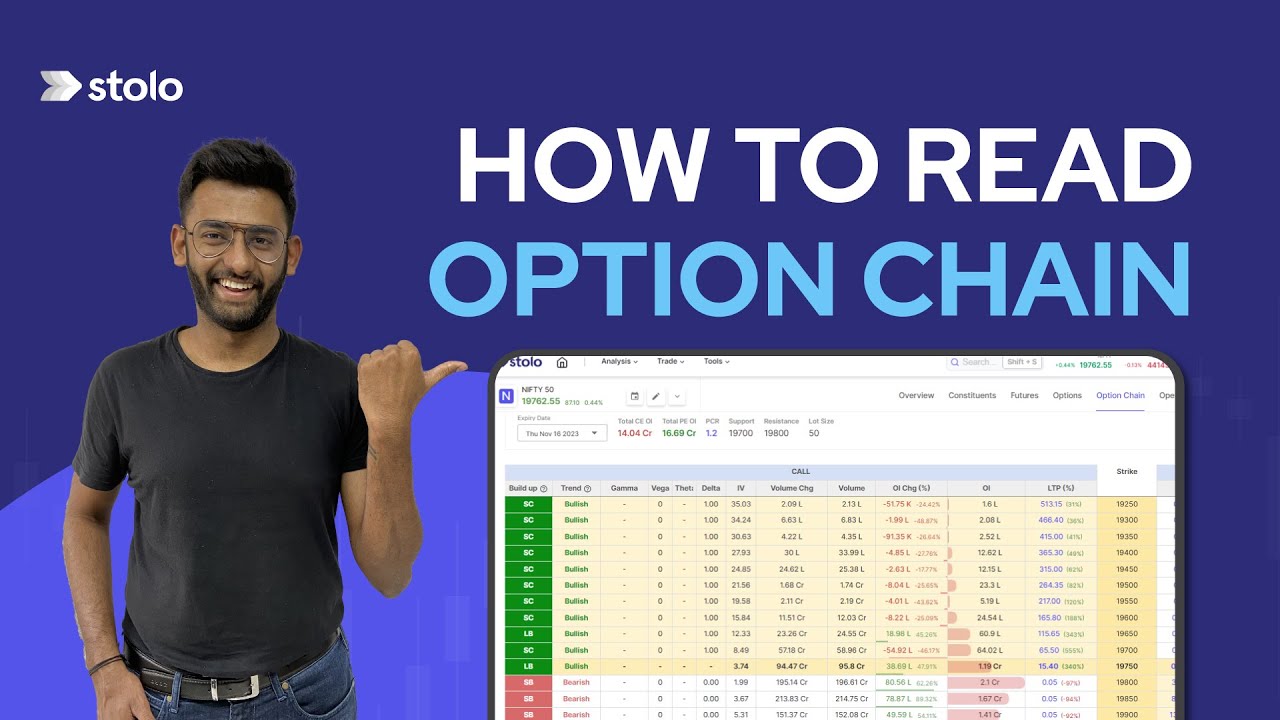
Stolo gives you real-time Nifty and Bank Nifty support and resistance levels, so you always know exactly where buying pressure is likely to emerge and where selling pressure is likely to cap the move. Use these S&R levels to time your F&O entries and exits with precision, backed by live NSE data and open interest confirmation.
Trader Voices
Every trade is a small bet on a dream, backed by risk and a decision you have to own. Stolo is built for traders who bring purpose and discipline to that decision, not just numbers.

My first impression of your site, "K.I.S.S."..... Simple yet effective...uncluttered and has all the ingredients a trader actually needs not the nonsensical ones... great job
These are unedited testimonials from traders in our Telegram community. Photos shown are AI-generated and used for representation only.

You have something unique in your platform that has changed my trading. I have used Quantsapp earlier didn't find it useful. I have tried opstra, sensibull etc.
These are unedited testimonials from traders in our Telegram community. Photos shown are AI-generated and used for representation only.

Dear Sir, I am really impressed with the user interface and multiple other facilities for option traders.
These are unedited testimonials from traders in our Telegram community. Photos shown are AI-generated and used for representation only.
Got a question or a feature you wish existed? Drop it in our Telegram community, the Stolo team is right there reading every message.