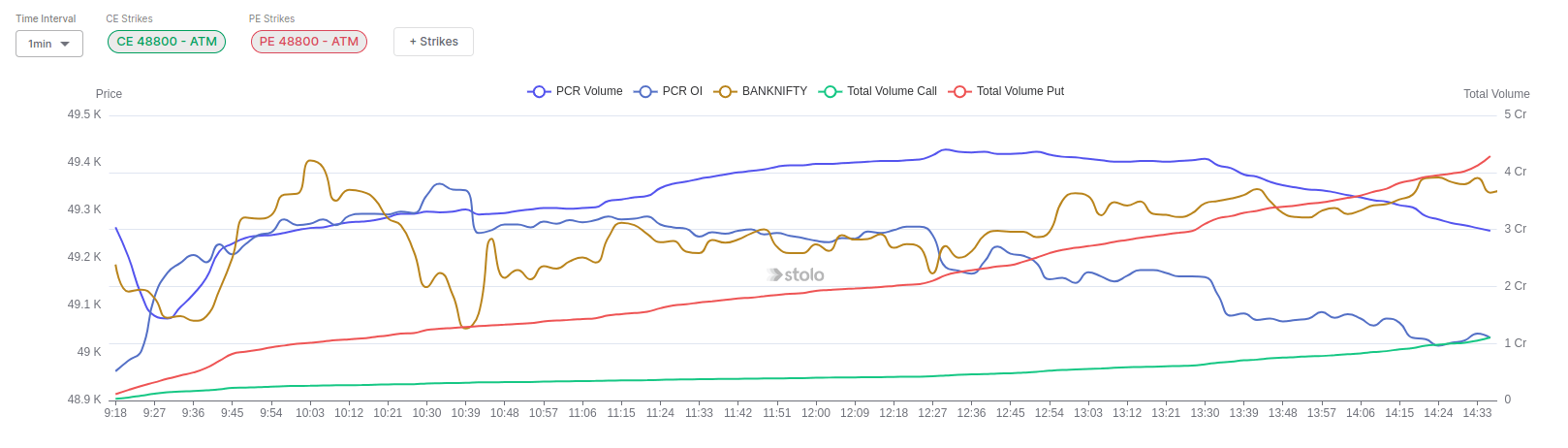
KEI Cumulative Volume


Cumulative Volume

Explore Cumulative Volume for KEI in Stolo

KEI Cumulative Volume – Participation Build-Up & Market Engagement

The KEI cumulative volume page on Stolo helps traders understand how options trading activity builds over the course of the session. Unlike snapshot volume, cumulative volume shows how participation adds up across time, revealing whether interest is accelerating or fading. This view is especially useful for identifying sustained engagement in KEI options rather than short-lived spikes. Stolo presents cumulative volume clearly so traders can focus on participation trends, not isolated trades.  

What Is KEI Cumulative Volume?

Cumulative volume represents the total number of option contracts traded from the start of the session up to the current moment. Each trade adds to this total, creating a running measure of participation. On Stolo, the KEI cumulative volume view answers an important question: Is trading interest in KEI options steadily increasing, or is activity slowing down? This perspective helps traders understand market engagement at a structural level.  

Why Cumulative Volume Matters for KEI Traders

Volume reflects attention and liquidity. When cumulative volume rises consistently, it suggests strong market participation. When it stagnates, interest may be limited. The KEI cumulative volume page on Stolo helps traders:
  • Identify sustained trading interest
  • Confirm liquidity before entering trades
  • Compare current activity with typical sessions
  • Understand whether moves are broadly supported
This context improves execution quality and confidence.  

Key Components of KEI Cumulative Volume on Stolo

KEI Cumulative Volume by Strike

This section shows how volume accumulates across different strikes during the session. On Stolo, traders can see whether activity concentrates near at-the-money strikes or spreads across levels. Strike-wise cumulative volume helps traders focus on where actual trading is happening in KEI options.  

KEI Call vs Put Cumulative Volume

Separating call and put cumulative volume helps traders understand participation balance. While not a directional signal, it provides context around trading preference. Stolo presents this comparison clearly to support sentiment awareness without encouraging overinterpretation.  

KEI Time-Based Volume Accumulation

Cumulative volume naturally increases over time, but the rate of increase matters. On Stolo, traders can observe whether volume builds steadily or accelerates during specific periods. Changes in accumulation rate often coincide with news, breakouts, or volatility shifts.  

How KEI Cumulative Volume Is Displayed on Stolo

Stolo presents cumulative volume using trend visuals and structured summaries. Traders typically see:
  • Running cumulative volume totals
  • Call vs put participation split
  • Strike-level volume contribution
  • Comparison with typical session patterns
This layout helps traders understand engagement without scanning raw trade data.  

How to Interpret KEI Cumulative Volume

Confirming Market Participation for KEI

Strong cumulative volume growth suggests broad participation. On Stolo, traders use this to confirm that price or volatility moves are supported by activity. Low cumulative volume growth may indicate limited interest, even if price moves appear significant.  

Identifying Liquidity Conditions

High cumulative volume usually correlates with better liquidity and tighter spreads. Stolo helps traders identify whether KEI options offer favorable execution conditions. This is especially important for multi-leg or higher-size trades.  

Differentiating Spikes vs Sustained Interest

Short-term volume spikes can be misleading. Cumulative volume helps traders see whether activity is sustained throughout the session. Stolo encourages traders to focus on accumulation trends rather than isolated bursts.  

How Different Traders Use KEI Cumulative Volume

KEI Intraday Traders

Intraday traders use cumulative volume on Stolo to ensure that active strikes remain liquid throughout the session.  

KEI Swing Traders

Swing traders monitor cumulative volume to confirm that interest supports holding positions beyond the day.  

KEI Options Strategists

Strategy-focused traders use cumulative volume to select strikes and expiries with consistent participation.  

Limitations of KEI Cumulative Volume Analysis

Cumulative volume does not indicate direction or intent. High volume can reflect both buying and selling. Stolo presents cumulative volume as a participation metric, encouraging traders to combine it with price, open interest, and volatility analysis.  

Why KEI Cumulative Volume on Stolo Matters

Liquidity and participation are foundational to options trading. Without them, execution quality suffers. By visualizing cumulative volume clearly, Stolo helps traders understand how engaged the market is with KEI options at any point during the session.  

Analyze KEI Cumulative Volume on Stolo

Use the KEI cumulative volume page on Stolo to assess participation and liquidity before trading. Combine this view with trending volume, option chain, and market chart tools for complete KEI analysis. Stolo supports informed, execution-aware trading decisions.

FAQ: KEI Cumulative Volume

What does KEI cumulative volume show?

KEI cumulative volume shows the total options trading activity accumulated during the session. Stolo uses this to reflect participation trends.  

How is cumulative volume different from regular volume?

Regular volume shows activity for a single period, while cumulative volume shows how activity builds over time. Stolo provides both views.  

Is cumulative volume useful for intraday trading?

Yes. Intraday traders use cumulative volume on Stolo to confirm liquidity and sustained interest.  

Does high cumulative volume mean bullish or bearish?

No. High cumulative volume indicates participation, not direction. Stolo encourages combining it with other indicators.  

Can cumulative volume help with strike selection?

Yes. Strikes with higher cumulative volume often offer better liquidity. Stolo highlights these patterns clearly.  

How often does KEI cumulative volume update?

Cumulative volume updates continuously during market hours on Stolo.  

Should beginners use cumulative volume analysis?

Yes. Beginners can use Stolo’s cumulative volume view to understand market participation before exploring advanced metrics.  

How does cumulative volume relate to open interest?

Volume reflects activity, while open interest reflects commitment. Stolo helps traders analyze both together.  

Can cumulative volume fade during the session?

Yes. Slowing accumulation may indicate reduced interest. Stolo helps traders observe these shifts.  

How does KEI cumulative volume connect with other Stolo tools?

It complements Stolo’s trending volume, option chain, and market chart by adding participation context.