
Exchange: NSE
Type: Equity
Sector: Capital Goods
Disclaimer: Hitachi Energy India Ltd Analysis pages are for educational purposes only with delayed data. One should not make any investment decisions based on the data provided here.
Analysis for POWERINDIA
POWERINDIA Overview
POWERINDIA Analysis
POWERINDIA Market Chart
POWERINDIA Option Chain
POWERINDIA Open Interest
POWERINDIA Straddle Chain
POWERINDIA Option Snapshot
POWERINDIA Straddle & Strangle
POWERINDIA Max Pain
POWERINDIA Options Premium
POWERINDIA Cumulative OI Change
POWERINDIA Open Hight Open Low
POWERINDIA Put Call Ratio (PCR)
POWERINDIA Multistrike OI Analysis
POWERINDIA Strikewise Oi Analysis
POWERINDIA Intraday OI Breakup
POWERINDIA Trending OI
POWERINDIA Premium Change / Decay
POWERINDIA Cumulative Volume
POWERINDIA Trending Volume
POWERINDIA Straddle & Strangle
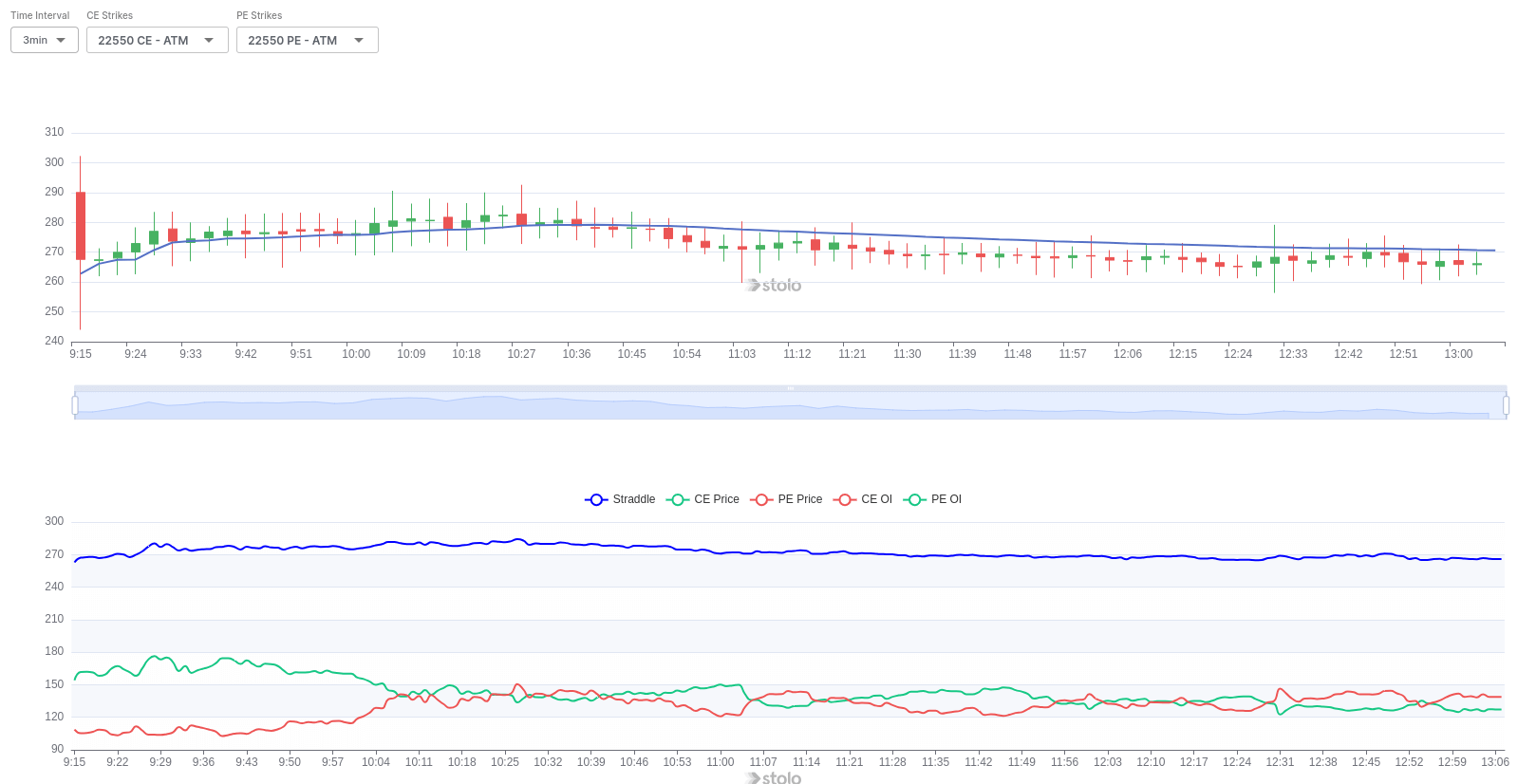
Explore Straddle & Strangle for POWERINDIA in Stolo
POWERINDIA Straddle & Strangle – Volatility Strategies Explained
The POWERINDIA straddle & strangle page on Stolo helps traders compare two of the most widely used volatility-based options strategies. Both strategies are designed to benefit from price movement, but they differ in cost, risk profile, and required movement to become profitable. This page focuses on clarity. By breaking down pricing, breakeven ranges, and market expectations, Stolo helps traders decide whether a straddle or a strangle better fits current POWERINDIA market conditions.What Are POWERINDIA Straddle and Strangle Strategies?
A straddle involves buying or selling a call and a put at the same strike price and expiry. A strangle involves buying or selling a call and a put at different strike prices but the same expiry. On Stolo, the POWERINDIA straddle & strangle view allows traders to see both strategies side by side. This comparison highlights how small structural differences lead to meaningful changes in risk and reward. Both strategies are commonly used when traders expect movement but are uncertain about direction.Why Traders Compare Straddle vs Strangle for POWERINDIA
Choosing between a straddle and a strangle depends on how much movement is expected and how much premium a trader is willing to pay. The POWERINDIA straddle & strangle page on Stolo answers key questions:- How much does each strategy cost?
- How far must POWERINDIA move to break even?
- Which strategy offers better risk efficiency?
Key Differences Between POWERINDIA Straddles and Strangles
POWERINDIA Cost and Premium Outlay
Straddles are typically more expensive because both options are at-the-money. Strangles are cheaper because they use out-of-the-money options. On Stolo, traders can directly compare the premium required for each strategy using live POWERINDIA pricing. This comparison helps determine whether lower cost or tighter breakevens are more appropriate. Cost is often the deciding factor between these two strategies.POWERINDIA Breakeven Range and Movement Requirement
Straddles have closer breakeven points, meaning POWERINDIA does not need to move as far to become profitable. Strangles require a larger move but offer lower upfront risk. Stolo calculates and displays breakeven ranges clearly, allowing traders to see exactly what kind of movement each strategy requires from POWERINDIA. This transparency supports better risk planning.POWERINDIA Sensitivity to Volatility Changes
Both strategies are sensitive to volatility, but straddles respond more aggressively due to higher premium exposure. Strangles have lower sensitivity but also lower decay risk. On Stolo, traders can see how implied volatility affects both strategies, helping them choose the one that aligns with current POWERINDIA volatility conditions.How POWERINDIA Straddle & Strangle Data Is Presented on Stolo
Stolo structures this page to emphasize comparison rather than isolated numbers. Traders can view straddle and strangle pricing across strikes and expiries in a consistent format. Displayed elements include:- Combined premium for each strategy
- Upper and lower breakeven levels
- Implied movement expectations
- Relative cost comparison