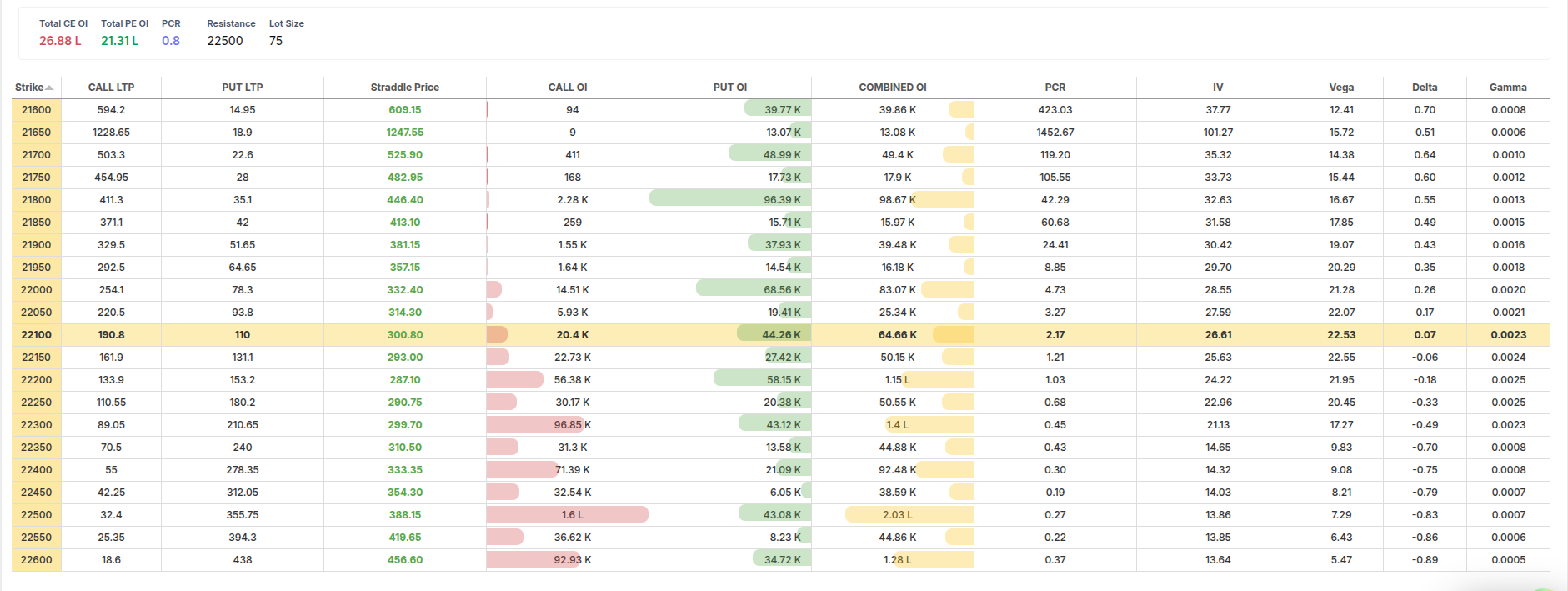
What does the UNIONBANK straddle chain on Stolo show?
The UNIONBANK straddle chain on Stolo shows combined call and put pricing, implied moves, and breakeven levels to help traders understand volatility expectations.
How is the implied move for UNIONBANK calculated?
The implied move is derived from the straddle premium and represents the expected price range until expiry. Stolo calculates and displays this automatically.
When should traders use the UNIONBANK straddle chain?
Traders use the UNIONBANK straddle chain when they want to evaluate volatility expectations, especially around events or uncertain market conditions.
Is the UNIONBANK straddle chain useful for directional trading?
The straddle chain is primarily volatility-focused, but it helps directional traders understand how much movement is already priced into UNIONBANK options.
Can beginners understand the UNIONBANK straddle chain?
Yes. Stolo presents the UNIONBANK straddle chain in a clear format that helps beginners visualize implied movement without complex calculations.
How does liquidity affect UNIONBANK straddles?
Liquidity depends on the underlying call and put options. Stolo helps traders identify strikes with sufficient liquidity to trade straddles efficiently.
Do all expiries have the same implied move for UNIONBANK?
No. Each expiry reflects different expectations. Stolo allows traders to compare implied moves across expiries easily.
Is the UNIONBANK straddle chain updated in real time?
Yes. The UNIONBANK straddle chain on Stolo updates continuously during market hours as option prices change.
How does the UNIONBANK straddle chain connect with other Stolo tools?
The straddle chain complements Stolo’s volatility analysis, option chain, and market chart by focusing specifically on implied movement.
Why should traders use the UNIONBANK straddle chain on Stolo?
Stolo provides a clean, structured view of UNIONBANK straddles, helping traders understand volatility expectations without manual calculations.