What is the main difference between a 360ONE straddle and strangle?
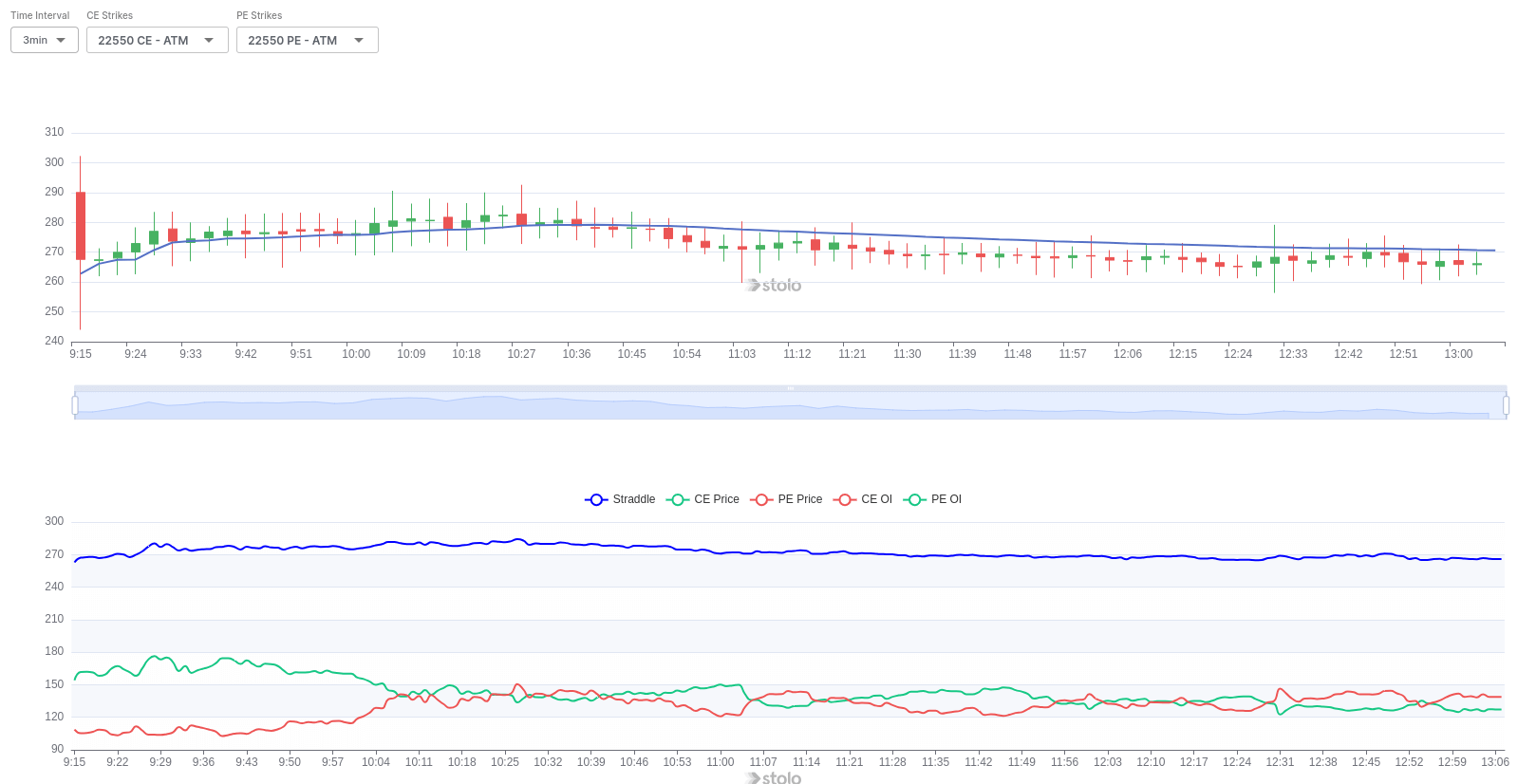
A 360ONE straddle uses the same strike for calls and puts, while a strangle uses different strikes. Stolo shows how this affects cost and breakeven range.
Which strategy is cheaper for 360ONE, straddle or strangle?
Strangles are generally cheaper due to out-of-the-money options. Stolo displays live pricing so traders can compare costs directly.
When should traders prefer a 360ONE straddle?
Traders may prefer a straddle when they expect moderate movement and want tighter breakeven levels for 360ONE.
When is a 360ONE strangle more suitable?
Strangles may be suitable when larger movement is expected but traders want lower upfront premium risk.
Are straddle and strangle strategies directional for 360ONE?
No. Both strategies are direction-neutral and depend on the magnitude of price movement, not direction.
How does volatility affect 360ONE straddles and strangles?
Higher volatility increases premiums for both strategies. Stolo helps traders see whether volatility is already priced into 360ONE options.
Can beginners use the 360ONE straddle & strangle page?
Yes. Stolo presents these strategies clearly so beginners can understand cost, breakevens, and expectations without complex calculations.
Do straddles and strangles work for intraday trading?
They are typically used for short-term to event-based trading. Intraday traders use Stolo to assess whether movement justifies the cost.
How does this page connect with other Stolo tools?
It complements Stolo’s straddle chain, option chain, and volatility analysis by focusing on strategy comparison.
Why should traders analyze 360ONE straddle & strangle strategies on Stolo?
Stolo provides a structured, side-by-side comparison that helps traders choose the most suitable volatility strategy for 360ONE without guesswork.