Straddle & Strangle

Get started free
PRESTIGE · Prestige Estate
Analysis Preview
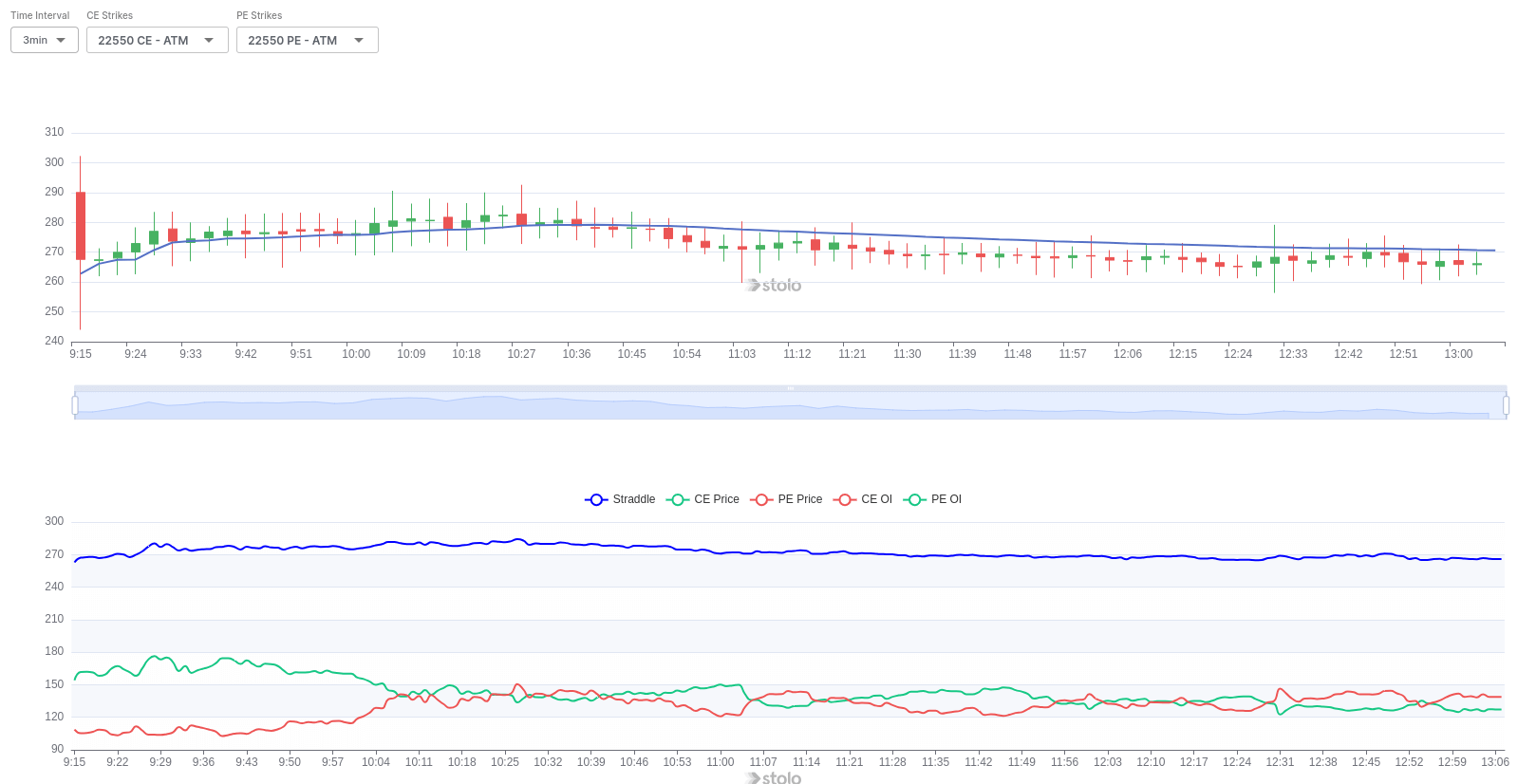
Straddle & Strangle analysis for PRESTIGE — Prestige Estate

Full analysis available in Stolo

Real-time data, live signals, and the full interactive tool are inside the platform.

Real-time data Smart signals Instant alerts Full interactivity
Unlock Full Analysis

Free to start · No credit card required

Inside Stolo
Live interactive charts
Real-time option chain
OI & PCR analysis
Smart alerts & signals

Straddle & Strangle

PRESTIGE Straddle & Strangle – Volatility Strategies Explained

The PRESTIGE straddle & strangle page on Stolo helps traders compare two of the most widely used volatility-based options strategies. Both strategies are designed to benefit from price movement, but they differ in cost, risk profile, and required movement to become profitable. This page focuses on clarity. By breaking down pricing, breakeven ranges, and market expectations, Stolo helps traders decide whether a straddle or a strangle better fits current PRESTIGE market conditions.  

What Are PRESTIGE Straddle and Strangle Strategies?

A straddle involves buying or selling a call and a put at the same strike price and expiry. A strangle involves buying or selling a call and a put at different strike prices but the same expiry. On Stolo, the PRESTIGE straddle & strangle view allows traders to see both strategies side by side. This comparison highlights how small structural differences lead to meaningful changes in risk and reward. Both strategies are commonly used when traders expect movement but are uncertain about direction.  

Why Traders Compare Straddle vs Strangle for PRESTIGE

Choosing between a straddle and a strangle depends on how much movement is expected and how much premium a trader is willing to pay. The PRESTIGE straddle & strangle page on Stolo answers key questions:
  • How much does each strategy cost?
  • How far must PRESTIGE move to break even?
  • Which strategy offers better risk efficiency?
By visualizing these differences, Stolo removes guesswork from volatility strategy selection.  

Key Differences Between PRESTIGE Straddles and Strangles

PRESTIGE Cost and Premium Outlay

Straddles are typically more expensive because both options are at-the-money. Strangles are cheaper because they use out-of-the-money options. On Stolo, traders can directly compare the premium required for each strategy using live PRESTIGE pricing. This comparison helps determine whether lower cost or tighter breakevens are more appropriate. Cost is often the deciding factor between these two strategies.  

PRESTIGE Breakeven Range and Movement Requirement

Straddles have closer breakeven points, meaning PRESTIGE does not need to move as far to become profitable. Strangles require a larger move but offer lower upfront risk. Stolo calculates and displays breakeven ranges clearly, allowing traders to see exactly what kind of movement each strategy requires from PRESTIGE. This transparency supports better risk planning.  

PRESTIGE Sensitivity to Volatility Changes

Both strategies are sensitive to volatility, but straddles respond more aggressively due to higher premium exposure. Strangles have lower sensitivity but also lower decay risk. On Stolo, traders can see how implied volatility affects both strategies, helping them choose the one that aligns with current PRESTIGE volatility conditions.  

How PRESTIGE Straddle & Strangle Data Is Presented on Stolo

Stolo structures this page to emphasize comparison rather than isolated numbers. Traders can view straddle and strangle pricing across strikes and expiries in a consistent format. Displayed elements include:
  • Combined premium for each strategy
  • Upper and lower breakeven levels
  • Implied movement expectations
  • Relative cost comparison
This format allows traders to evaluate trade-offs quickly and clearly.  

How to Interpret PRESTIGE Straddle & Strangle Signals

Selecting the Right Strategy for PRESTIGE

If the implied move shown on Stolo suggests moderate movement, a straddle may offer better alignment due to closer breakevens. If a large move is expected but uncertainty remains, a strangle may offer better cost efficiency. This decision depends on volatility expectations, risk tolerance, and time horizon for PRESTIGE.  

Managing Risk Using Breakevens

Breakeven levels provide a clear framework for risk assessment. On Stolo, traders use these levels to decide position size and exit criteria for PRESTIGE strategies. Knowing the required movement in advance reduces emotional decision-making.  

How Different Traders Use PRESTIGE Straddle & Strangle Analysis

PRESTIGE Event-Based Traders

Event traders use this page on Stolo to assess whether upcoming events justify the cost of volatility strategies in PRESTIGE.  

PRESTIGE Volatility Traders

Volatility traders rely on direct comparisons to find inefficiencies between implied expectations and anticipated movement.  

PRESTIGE Risk-Conscious Traders

Risk-focused traders use breakeven analysis to select strategies that align with predefined risk limits for PRESTIGE.  

Why the PRESTIGE Straddle & Strangle Page on Stolo Matters

Volatility strategies can be powerful but complex. Without clear comparison, traders may overpay for risk or choose unsuitable structures. Stolo simplifies this decision by presenting straddle and strangle data side by side, making volatility strategy selection more transparent and disciplined.  

Compare PRESTIGE Strategies on Stolo

Use the PRESTIGE straddle & strangle page on Stolo to evaluate volatility strategies before entering positions. Combine this view with volatility and option chain data for a complete analysis workflow. Stolo supports informed, structured strategy decisions.

Frequently Asked Questions

FAQ: PRESTIGE Straddle & Strangle

What is the main difference between a PRESTIGE straddle and strangle?

A PRESTIGE straddle uses the same strike for calls and puts, while a strangle uses different strikes. Stolo shows how this affects cost and breakeven range.  

Which strategy is cheaper for PRESTIGE, straddle or strangle?

Strangles are generally cheaper due to out-of-the-money options. Stolo displays live pricing so traders can compare costs directly.  

When should traders prefer a PRESTIGE straddle?

Traders may prefer a straddle when they expect moderate movement and want tighter breakeven levels for PRESTIGE.  

When is a PRESTIGE strangle more suitable?

Strangles may be suitable when larger movement is expected but traders want lower upfront premium risk.  

Are straddle and strangle strategies directional for PRESTIGE?

No. Both strategies are direction-neutral and depend on the magnitude of price movement, not direction.  

How does volatility affect PRESTIGE straddles and strangles?

Higher volatility increases premiums for both strategies. Stolo helps traders see whether volatility is already priced into PRESTIGE options.  

Can beginners use the PRESTIGE straddle & strangle page?

Yes. Stolo presents these strategies clearly so beginners can understand cost, breakevens, and expectations without complex calculations.  

Do straddles and strangles work for intraday trading?

They are typically used for short-term to event-based trading. Intraday traders use Stolo to assess whether movement justifies the cost.  

How does this page connect with other Stolo tools?

It complements Stolo’s straddle chain, option chain, and volatility analysis by focusing on strategy comparison.  

Why should traders analyze PRESTIGE straddle & strangle strategies on Stolo?

Stolo provides a structured, side-by-side comparison that helps traders choose the most suitable volatility strategy for PRESTIGE without guesswork.

You request we deliver. Only platform driven by open trader’s community.

Have questions or feature requests? Join our Telegram community to connect directly with the Stolo team. We are always listening!

Stolo Telegram Channel
Join our Telegram Channel
for more updates
Subscribe to YouTube Channel