Cumulative Volume Change for NIFTY and F&O Options
Cumulative volume change in Stolo adds up the traded volume across the option strikes you select and plots the running call and put totals through the session, alongside price and PCR. Where open interest tells you how much positioning is open, volume tells you how much is trading right now, which is the read on whether a move has real participation.
Cumulative Volume in Stolo
The problem it solves
A price move on the option chain can look identical whether a thousand contracts or a hundred thousand traded to produce it. Only volume separates the two. Checking volume strike by strike is slow; cumulative volume sums it and plots it against price so you can see at a glance whether the session's move is backed by participation or is thin and fragile.
The concept
- Volume is activity, OI is inventory. Volume measures trading in the period; OI measures what remains open.
- Participation confirms. A breakout on a cumulative volume surge has buyers and sellers committing to it.
- Which side is trading. Compare cumulative call volume to put volume. A one-sided surge shows where the crowd is acting.
- Volume plus OI plus price. Volume up and OI up is fresh positioning; volume up and OI flat is churn; both matter for reading the move.
Key terms explained
| Term | What it means |
|---|---|
| Cumulative call volume | Total traded volume across selected call strikes on the session. |
| Cumulative put volume | The same for puts. |
| Volume surge | A steep rise in the cumulative line over a short interval. |
| Participation | How many contracts are trading, a measure of conviction behind a move. |
| Churn | High volume with little OI change: contracts changing hands between existing holders. |
| PCR (volume context) | The put-call ratio shown alongside for the sentiment read. |
A worked example
NIFTY is at 22,000 and breaks above 22,050 at 11:00.
- On the cumulative volume view, call volume spikes sharply in the 11:00 to 11:15 interval while put volume is flat. The break happened on heavy, one-sided call activity.
- Open interest at 22,100 CE is also rising, so this is fresh call buying, not writing.
The read: the breakout has real participation and directional intent behind it. A trader treats the 22,050 break as valid and takes the long, where the same break on a flat volume line would be a candidate to fade.
How to use it in Stolo
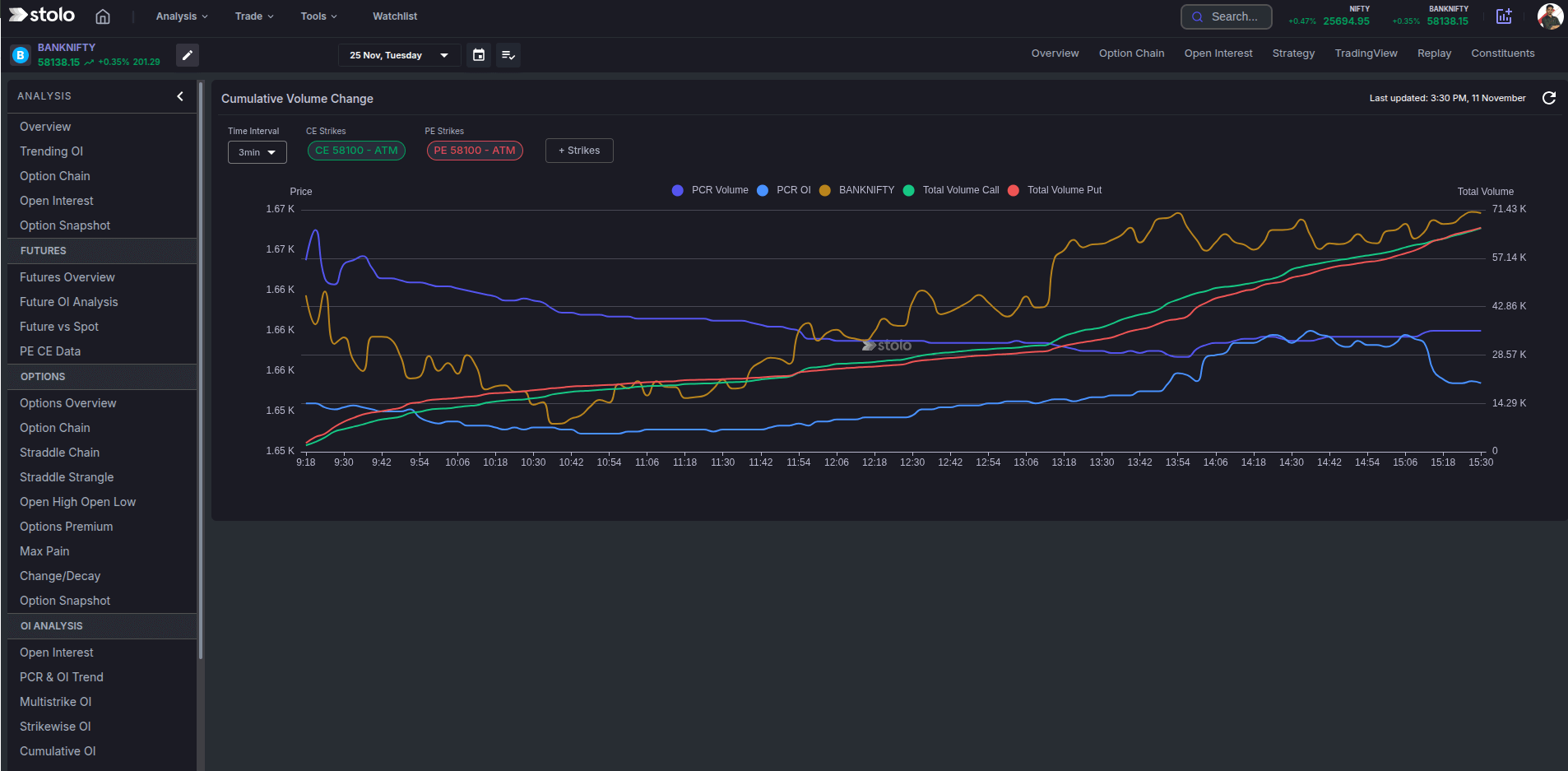
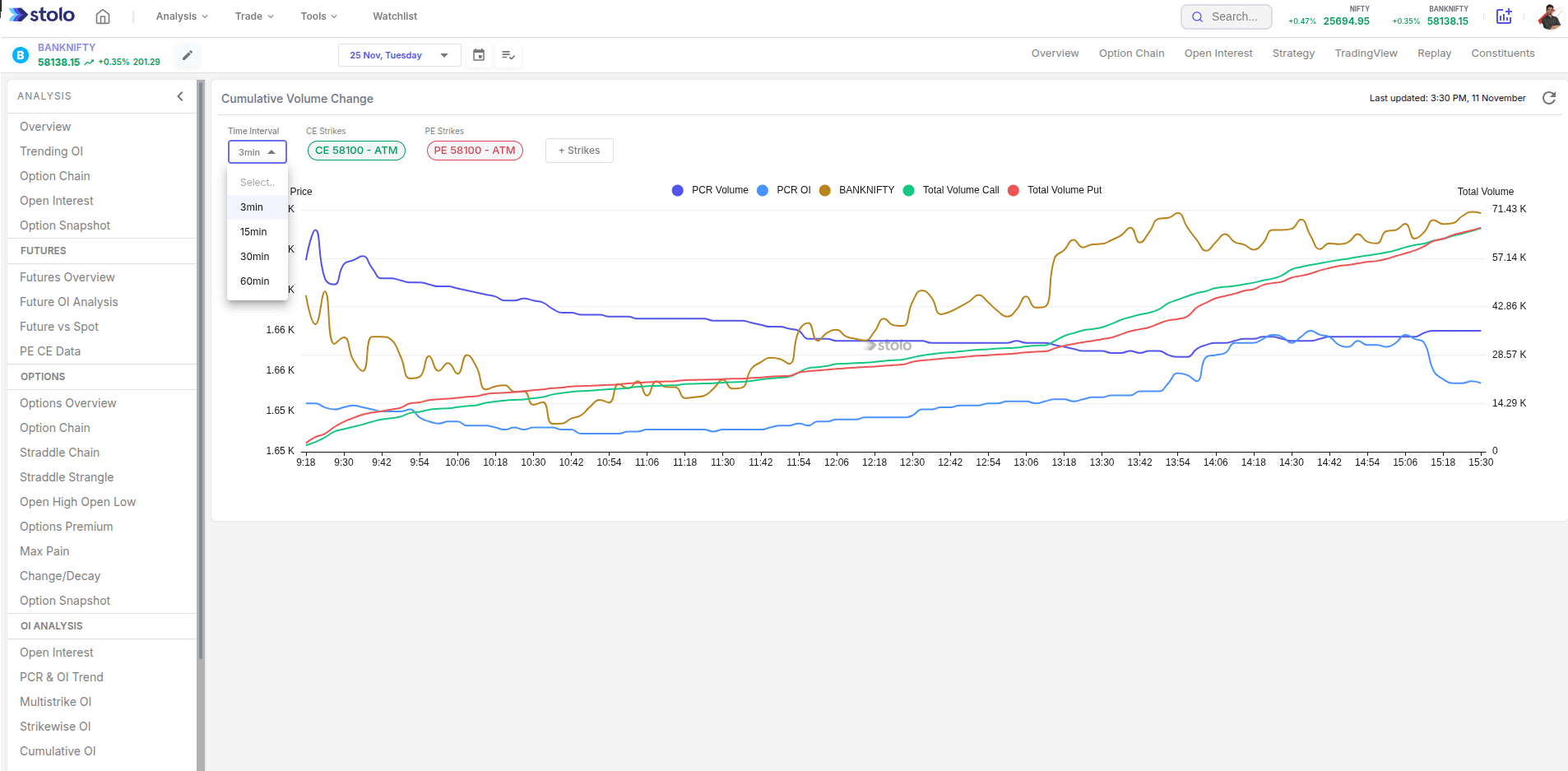
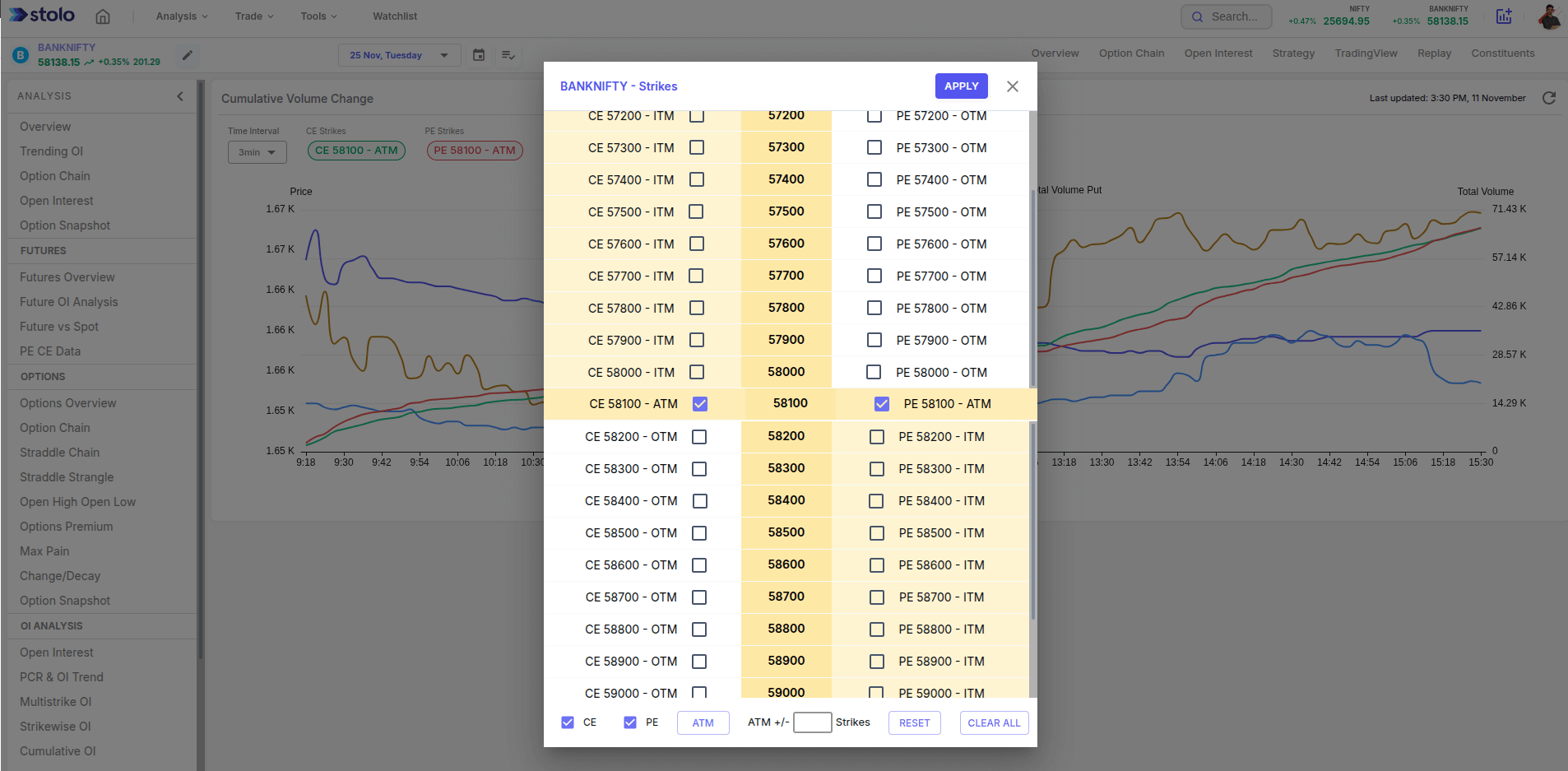
- Open Analysis, then Options, then Cumulative Volume Change.
- Choose the instrument and expiry.
- Set the strike band to include and the time interval.
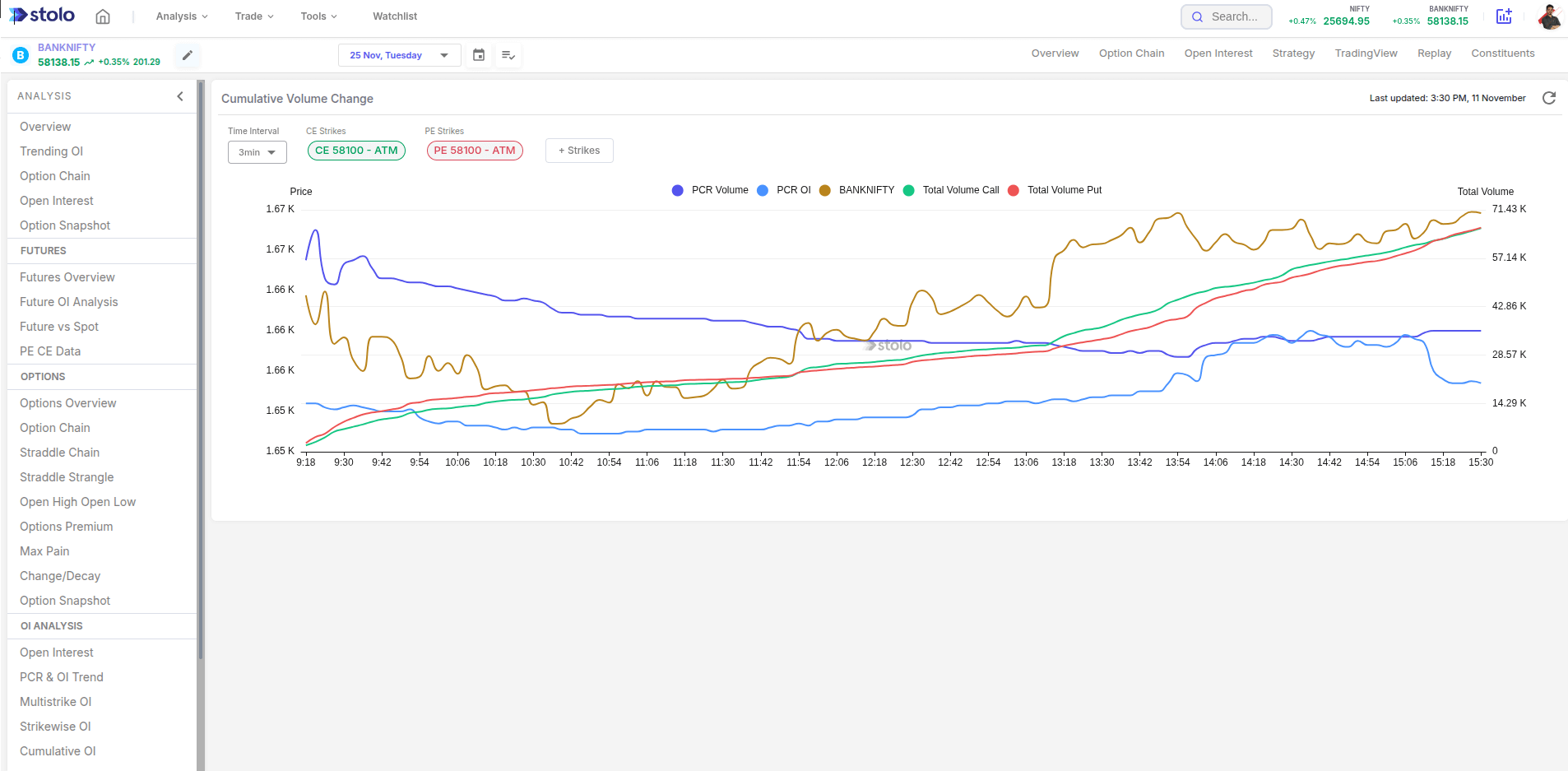
- Read the cumulative call and put volume lines against price: a move on a volume surge is confirmed, a move on flat volume is not.
- Cross-check with open interest to tell fresh positioning from churn.
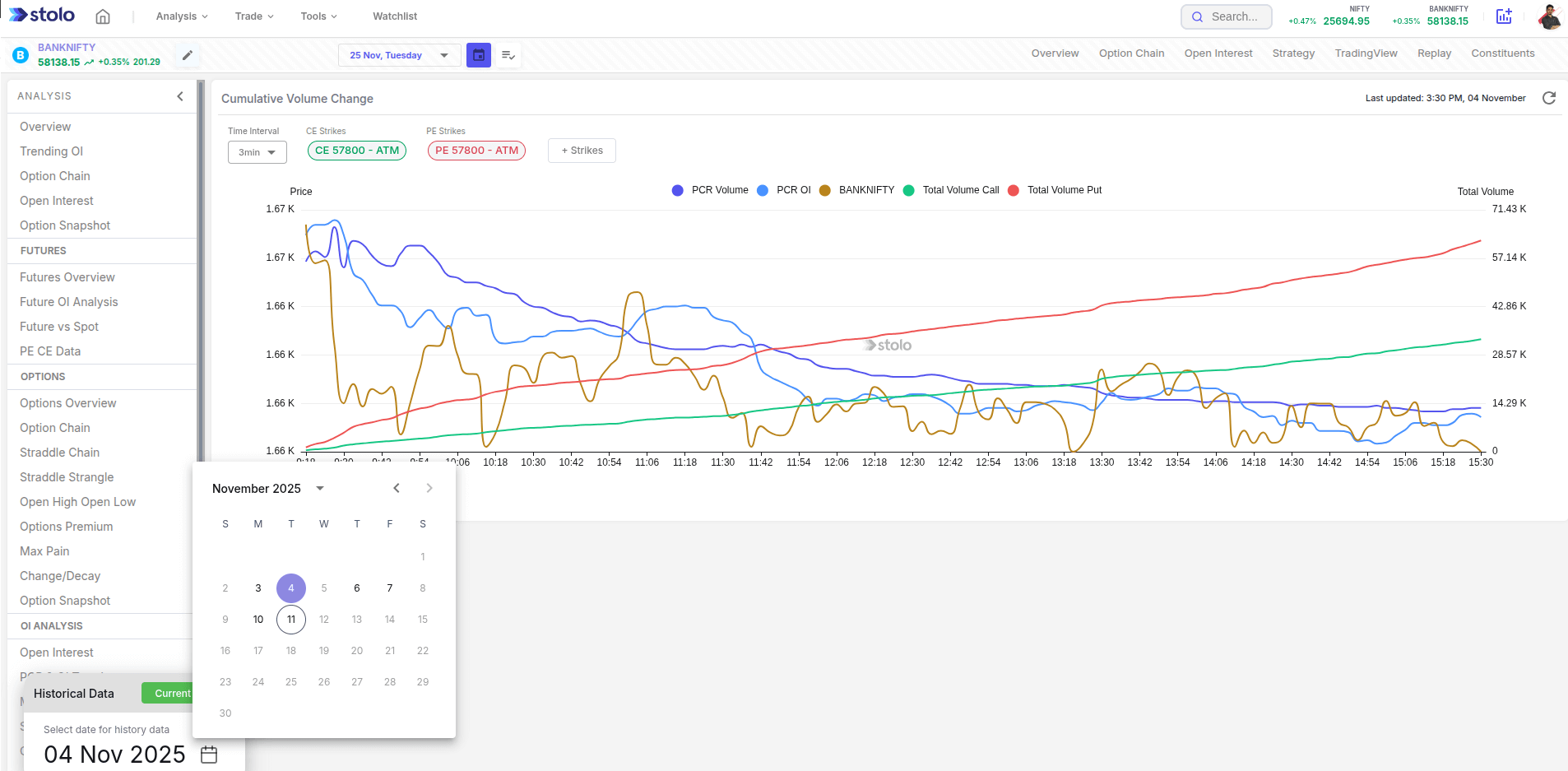
- Load a past date to see how participation built into a previous session.
The first ten minutes and the hour around a scheduled event carry the day's heaviest option volume. Judge those windows on their own, not against the quiet midday base rate.
How traders use it
- Breakout filter. Only trade an index breakout that comes with a cumulative volume surge.
- Fade thin moves. A price push with no volume behind it is a mean-reversion candidate.
- Read the aggressor. A one-sided call or put volume surge shows which way the crowd is leaning.
- Event participation. Compare volume in the event window to the same window on quiet days to gauge how much the market cares.
Live mode and history mode
Live mode streams the cumulative volume lines through the session. History mode redraws them for a past date, so you can study how participation behaved around a previous expiry or announcement.
Frequently asked questions
What is cumulative volume change in options?
How is volume different from open interest?
Why watch cumulative option volume?
What does a call volume surge mean?
Can I choose which strikes are included?
Can I change the time interval?
Does this work on stock options?
Can I view cumulative volume for a past day?
How is this different from trending volume?
Which plan includes cumulative volume change?
Check the participation behind the move
Open Stolo's Cumulative Volume Change to track total call and put option volume against price for any F&O instrument.
Start with a Flexi Trial from ₹199